
AI coding tools are moving quickly, but many of them still live beside the real development workflow: a chat panel here, a terminal there, project notes somewhere else, and a model trying to reconstruct context from whatever fits into a prompt.
BLXCode is our attempt to make that workflow more coherent. It is an open-source, local-first Agent Development Environment for developers who want AI agents to work with real workspace context: files, terminals, Git state, memory, plans, tasks, screenshots, rules, skills, and handoff to external CLI agents.
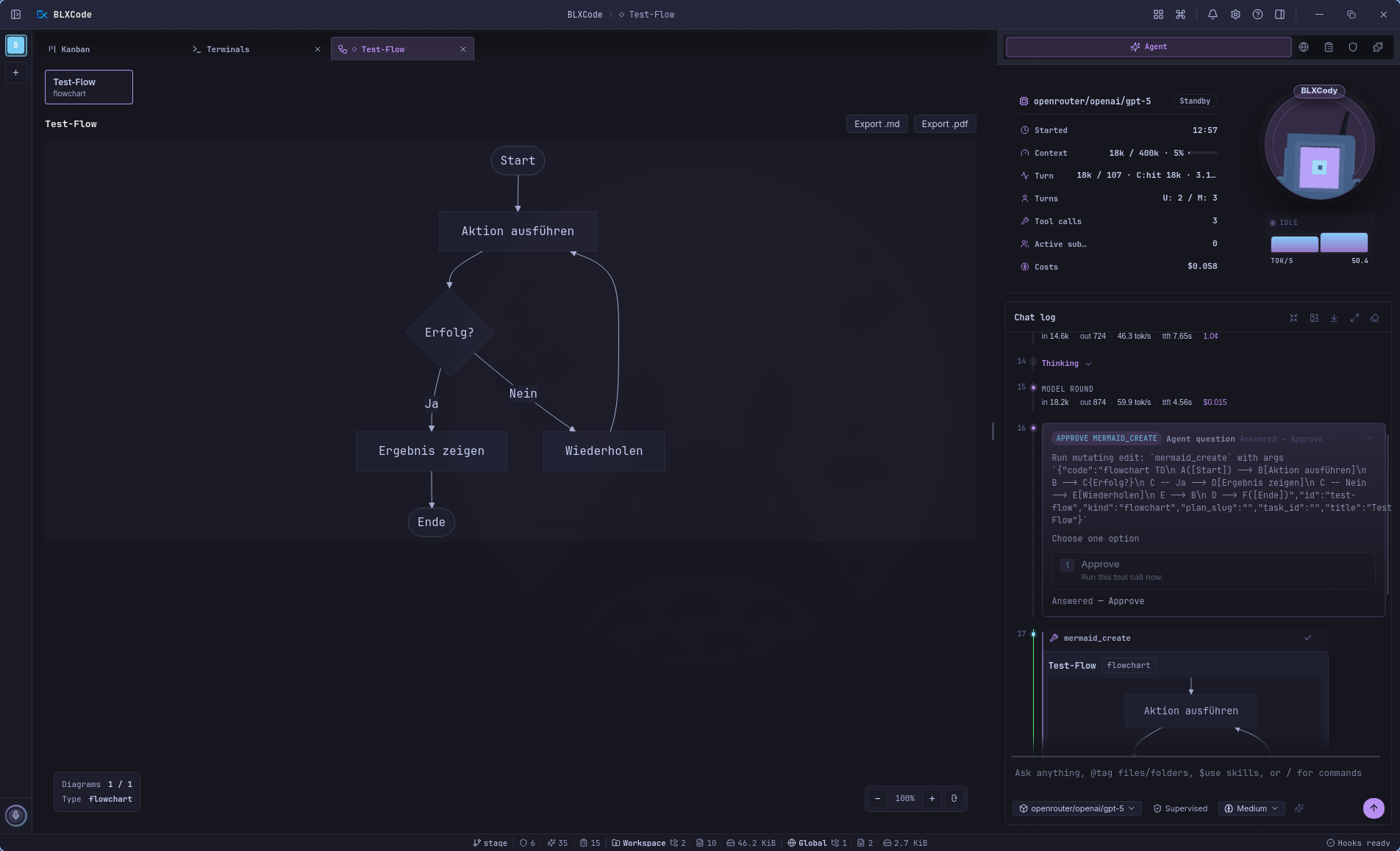
More Than A Chat Panel
BLXCode is not meant to be just another AI chat window attached to an editor. The goal is to give agents a structured place to work.
That means the agent can understand more than one prompt at a time. It can use persistent workspace memory, inspect plans, follow rules, work through tasks, see terminal context, and pass useful context into tools such as Claude, Codex, Gemini, OpenCode, or Cursor.
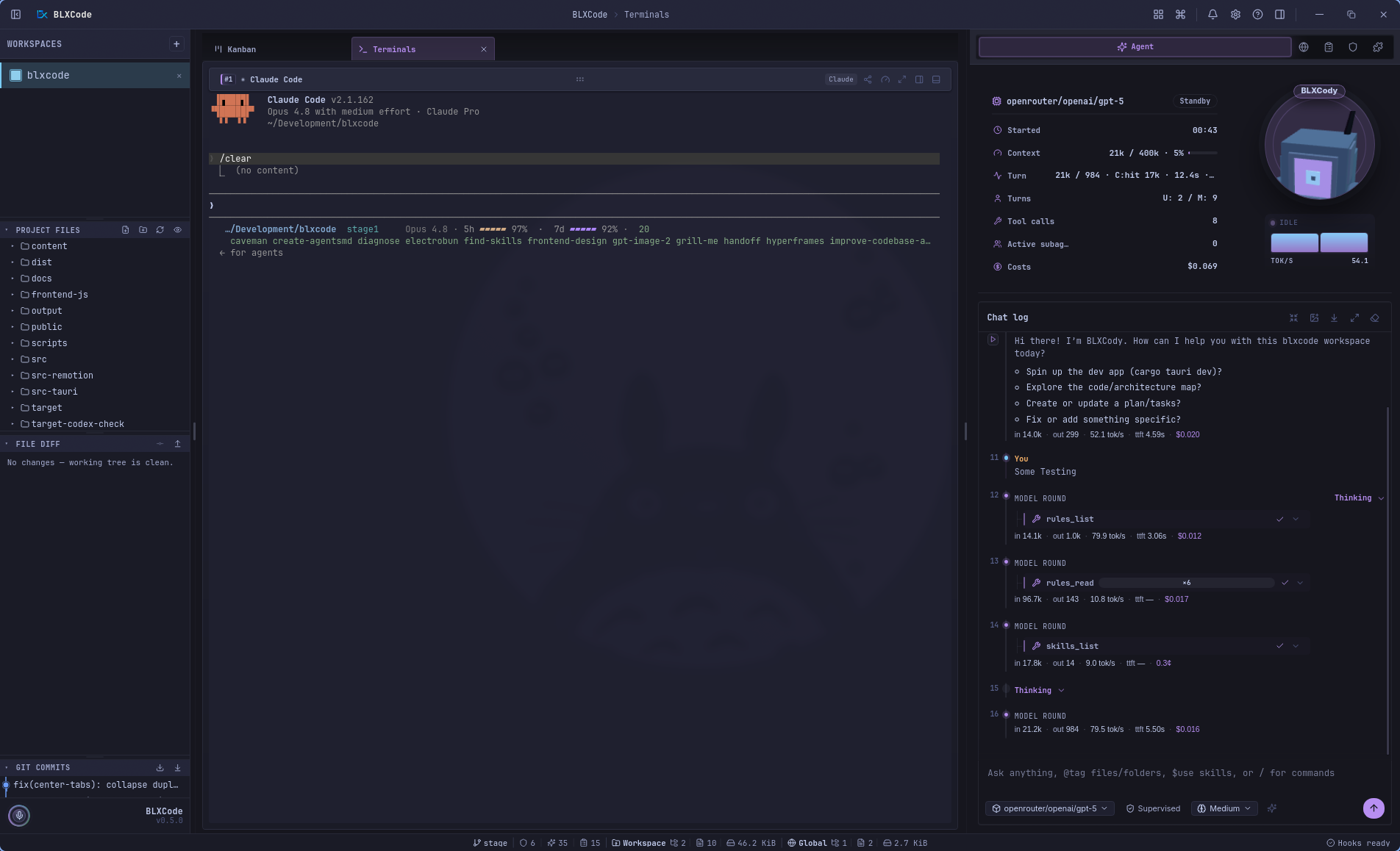
The result is a workflow where the developer stays in control, while the agent has enough context to be useful without constantly starting from zero.
Built Around Local Workspaces
BLXCode is a native desktop app built with Tauri, Rust, and Leptos. That local-first foundation matters because the target workflow is not abstract cloud editing. It is the day-to-day reality of software work: terminals, builds, tests, Git changes, notes, screenshots, and project-specific conventions.
Workspaces can contain a .agents/ structure for durable project knowledge:
- Memory for long-lived learnings and architecture notes.
- Plans for larger features or implementation paths.
- Tasks for visible progress and status.
- Rules for project conventions and agent behavior.
- Skills for repeatable workflows that should not depend on retyping the same prompt.
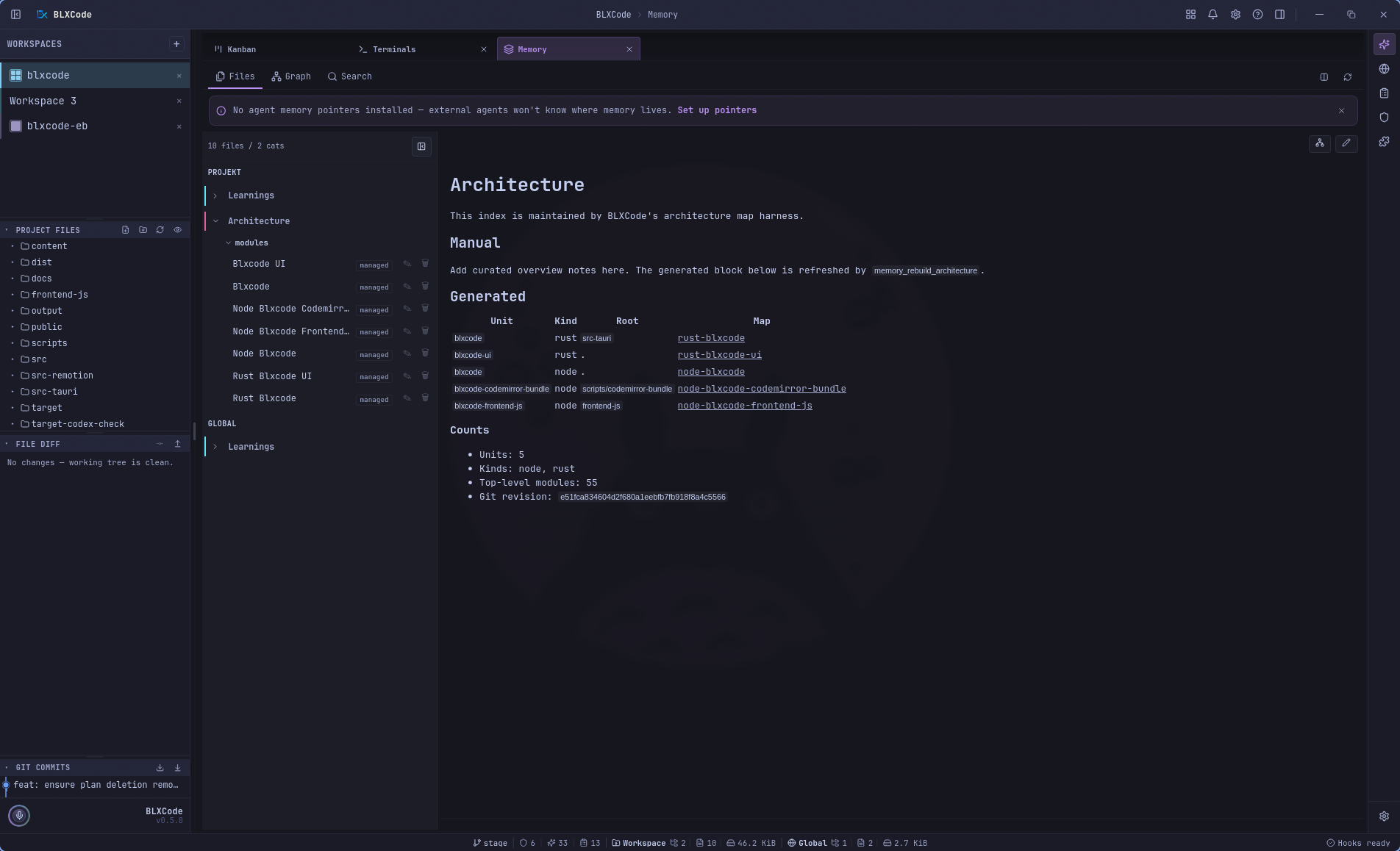
This turns agent context into real project artifacts. They can be read, edited, versioned, and reused instead of disappearing when a chat session ends.
Planning That Agents Can Actually Use
AI-assisted development gets messy when work only exists as a long conversation. BLXCode includes planning tools so a feature can move from idea to plan to tasks, and from tasks into visible progress.
Plans are Markdown-based, and tasks can be managed through a Kanban board. That gives both the developer and the agent a shared map: what is planned, what is active, what is blocked, and what is done.
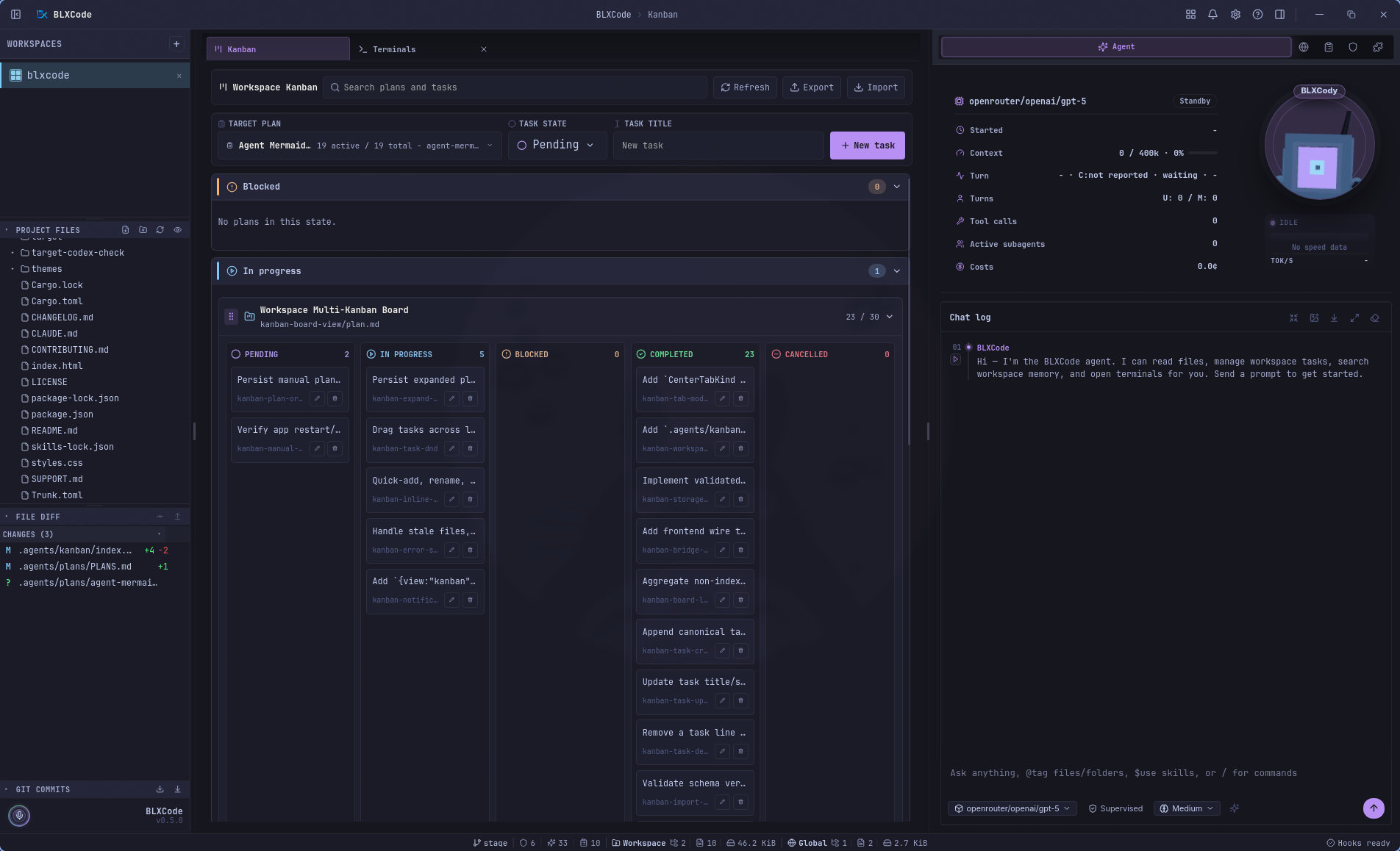
For agentic coding, this is important. The point is not to make the agent "autonomous" in a vague way. The point is to make the work traceable enough that humans can steer it.
Terminals As Part Of The Agent Workflow
Many developers already use CLI agents. BLXCode embraces that instead of trying to hide it.
The workspace can run multiple terminal sessions, preserve context, and hand off workspace information to external agents. That makes it possible to keep using specialized tools while giving them better project context than a plain terminal prompt usually provides.
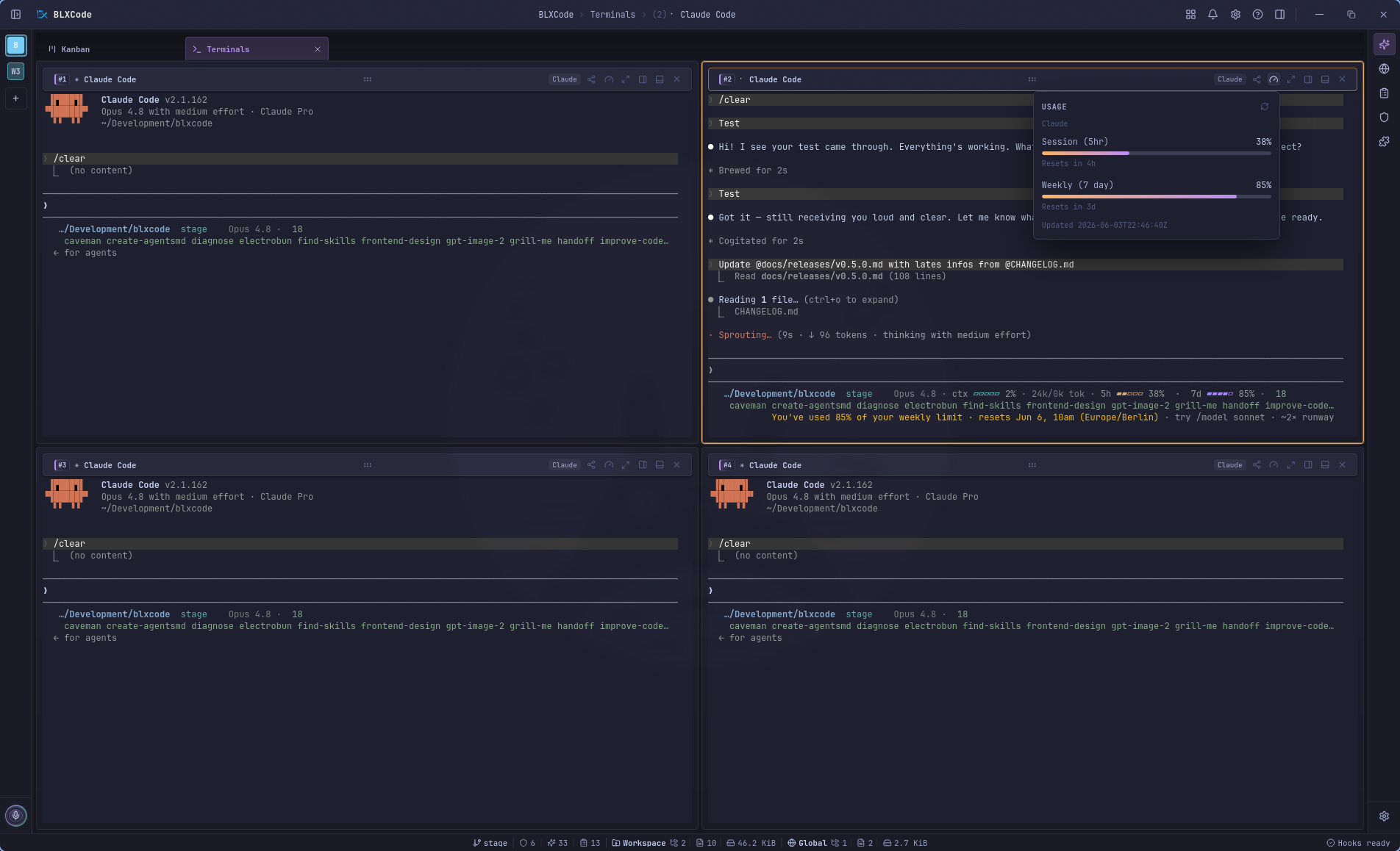
This is especially useful when moving between planning, implementation, testing, and review. The terminal is not a separate place where context gets lost; it becomes part of the same agent workspace.
Coordinated Agent Workflows
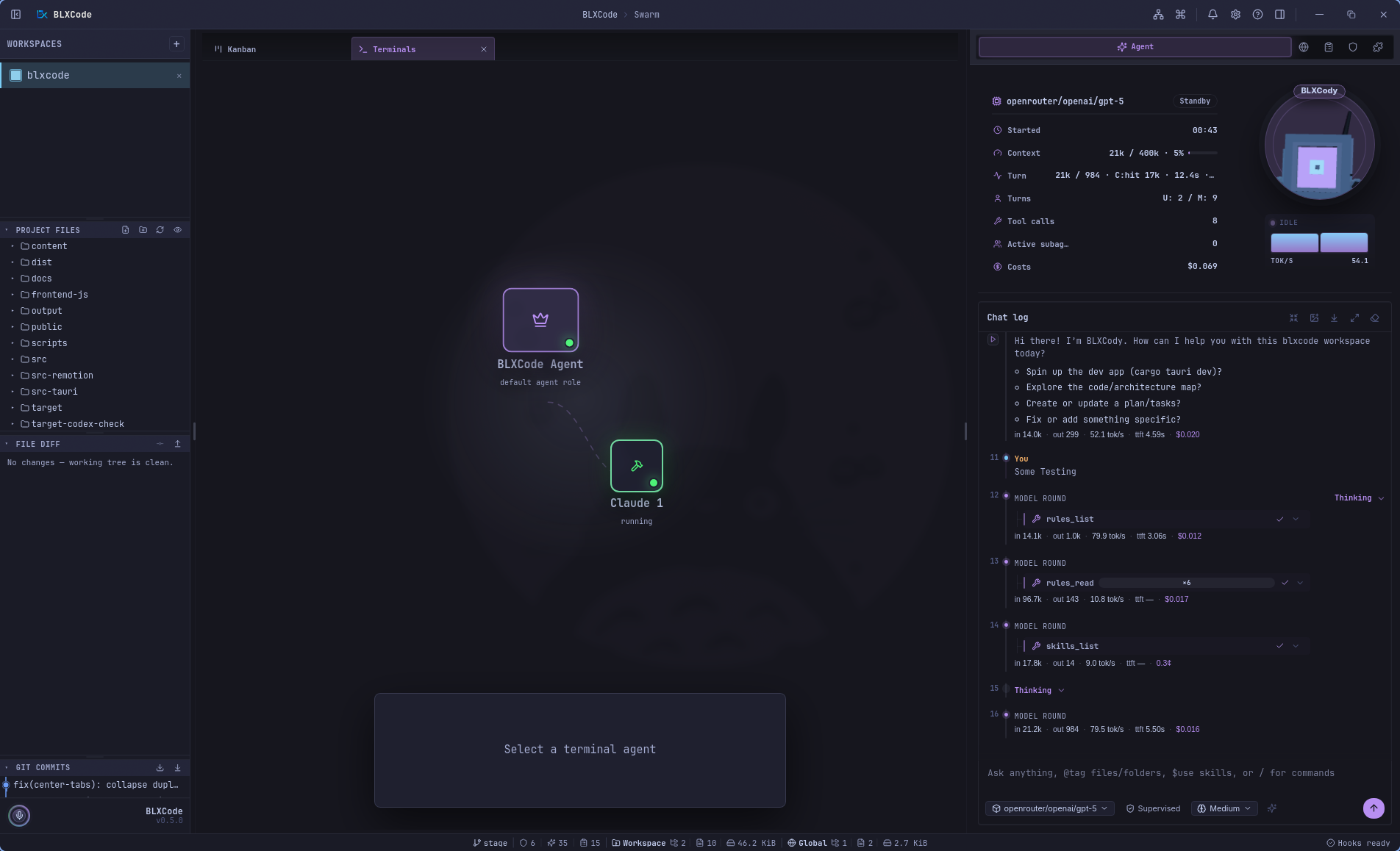
BLXCode also explores coordinated agent workflows. A main agent can use specialized subagents for tasks such as research, review, or security analysis, then bring structured results back into the workspace.
That direction is still evolving, but it reflects the core idea behind the project: useful AI development is less about a single magic prompt and more about giving agents the right environment, constraints, and memory.
Why Open Source Matters Here
Developer tooling is personal. People have strong preferences about models, providers, terminals, editors, workflows, and where project knowledge should live.
That is why BLXCode is open source. It is built for developers who want control over their AI tooling instead of being locked into one cloud-only workflow. You choose the providers and agents you use, while your workspace context stays close to the project.
Try BLXCode
BLXCode is actively evolving, and the direction is clear: agents should be easier to supervise, easier to resume, and easier to connect with the real development environment.
If that is the kind of AI coding workflow you want to explore, start here:
Source code is available on GitHub: